
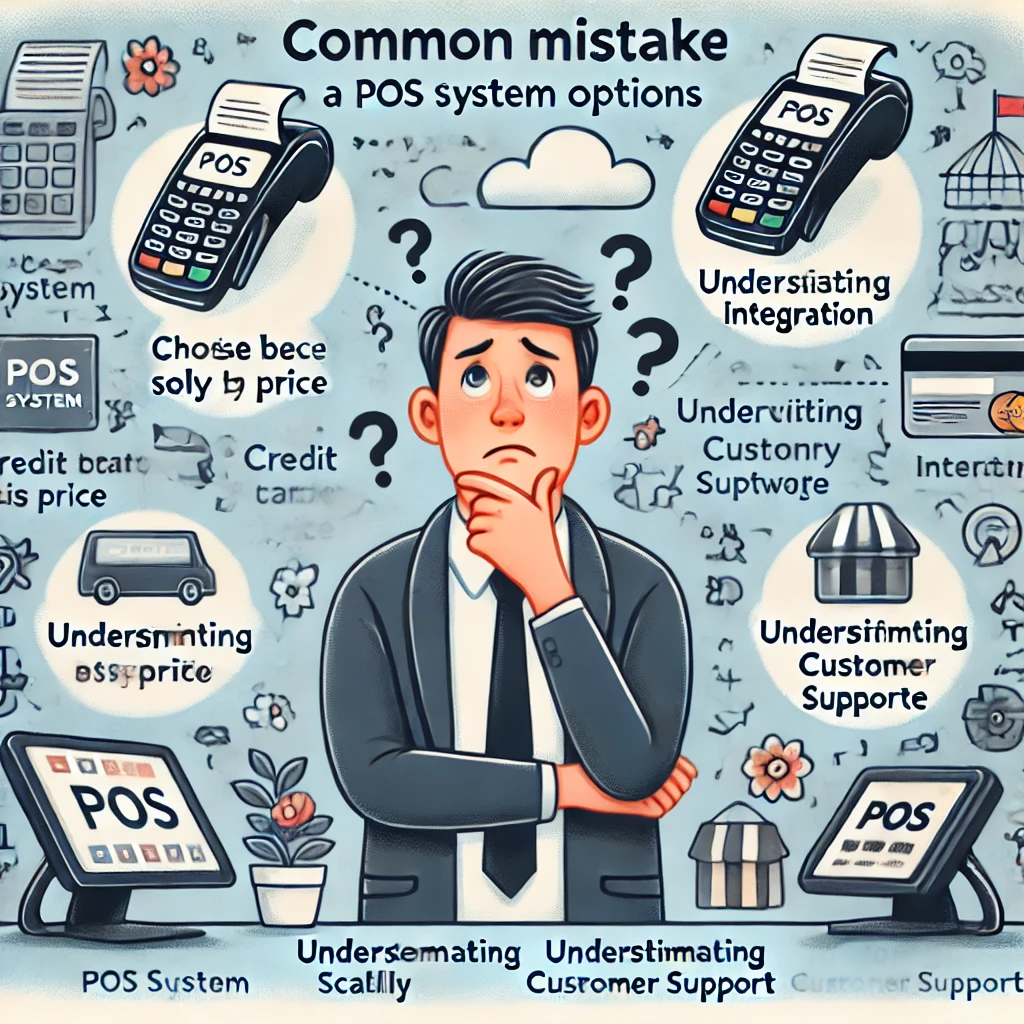
Choosing the right POS system can either make your business operations smoother or create daily frustrations. Unfortunately, many businesses in Uganda end up with systems that don’t fully meet their needs because they make avoidable mistakes during the selection process.
Whether you’re running a supermarket, pharmacy, restaurant, or wholesale business, avoiding these common mistakes can save you time, money, and stress in the long run.
Here are some of the most frequent mistakes businesses make when choosing a POS system in Uganda — and how to avoid them.
1. Choosing Based Only on Price
Many business owners go for the cheapest POS system available, thinking they are saving money. While cost is important, focusing only on price often leads to problems later.
Cheap systems may lack important features like proper inventory tracking, reliable offline mode, or good reporting. In the long run, you may end up spending more on fixes, workarounds, or even switching to a better system.
Tip: Consider the total cost of ownership — including training, support, updates, and how well the system will serve your business as it grows.
2. Ignoring Offline Functionality
Internet and power outages are still common in many parts of Uganda. Yet, some businesses choose POS systems that stop working completely when there is no internet connection.
This can lead to lost sales, long queues, and unhappy customers during downtime.
Tip: Always ask whether the system works fully offline and how data is synced once the internet is restored. A good cloud POS should allow you to continue selling without interruptions.
3. Not Checking EFRIS Compliance
With URA’s push for EFRIS compliance, many businesses are now required to issue electronic fiscal receipts. Some POS systems in the market are either not fully compliant or require complicated workarounds.
Choosing a non-compliant system can lead to penalties or the need to replace the system later.
Tip: Confirm that the POS system is properly integrated with EFRIS and can generate compliant receipts without extra hassle.
4. Overlooking Multi-Branch Needs
Some businesses start with one shop and later expand to multiple branches. If the POS system was not designed to handle multiple locations, managing stock, sales, and reports across branches becomes difficult and time-consuming.
Tip: If you already have more than one branch or plan to expand, choose a system that offers real-time multi-branch management from day one.
5. Not Testing the System Before Buying
Many businesses make decisions based on sales presentations or what they see in brochures without properly testing the system with their own products and processes.
This often leads to surprises after purchase — such as difficulty in adding products, generating reports, or handling specific workflows.
Tip: Always request a live demo using your actual products. Test how easy it is to process sales, manage stock, and generate reports.
6. Underestimating the Importance of Support and Training
A POS system is only as good as the support behind it. Some businesses choose systems with poor or slow local support, which becomes a big problem when issues arise.
Others skip proper training, leading to staff making mistakes or not using the system to its full potential.
Tip: Choose a provider that offers good local support and proper training. Free training at the beginning can make a big difference in how smoothly your team adopts the new system.
7. Focusing Only on Hardware Instead of Software
Some business owners focus too much on the physical devices (printer, scanner, screen) and pay little attention to the quality of the software.
While hardware is important, the software is what determines how well the system manages your sales, inventory, reports, and growth.
Tip: Prioritize software quality and features. Good hardware can always be added later, but weak software will limit your operations.
Final Thoughts
Choosing a POS system is not just about buying software and hardware — it’s about finding a long-term solution that supports your business operations and growth.
By avoiding these common mistakes, you increase your chances of selecting a system that saves you time, reduces errors, and helps you make better business decisions.
If you’re currently looking for a reliable POS system in Uganda, take time to evaluate your needs properly, test different options, and choose a system that offers strong local support, offline functionality, EFRIS compliance, and room to grow.
At POSParl, we’ve designed our system specifically with Ugandan businesses in mind. It works offline, supports EFRIS and mobile money, and allows you to add advanced features as your business expands.